
You have an idea for a high school drone program. You know students could benefit from hands-on flight training, FAA Part 107 preparation, and exposure to real-world drone careers.
Now you need to get the school on board.
The approval process can vary considerably by school and district. A new CTE course may follow a different process than an after-school program, a drone unit added to an existing class, or a request to purchase new equipment.
Instead of looking for one universal approval process, focus on building a clear proposal that explains what students will learn, what the program requires, how it will operate safely, and why it is worth the investment.
1. Find Out What “Approval” Means at Your School
Before creating a detailed proposal, determine what you are actually asking the school to approve.
Are you proposing:
- A new semester or year-long course?
- Drone curriculum within an existing STEM or CTE class?
- An after-school or summer program?
- New equipment for an existing program?
- Teacher professional development?
- A pilot program before launching a full course?
The process may be different for each.
Start by connecting with the appropriate school or district leadership and asking what process applies to the type of program you want to create.
That first conversation can help identify required forms, timelines, budget procedures, and supporting information before you spend time building a proposal that does not match the school’s process.
2. Start With What Students Will Gain
Lead with the educational value—not the drones.
Instead of:
“We want to purchase drones for students.”
Explain what students will actually learn.
A high school drone program can support skills and outcomes such as:
- FAA Part 107 preparation
- Aviation and airspace knowledge
- Hands-on flight skills
- Safe flight operations
- Problem-solving and decision-making
- Mapping, photography, inspections, or data collection
- Career exploration
- Communication and teamwork
- Workforce readiness
This positions the program as an educational and career-development opportunity rather than simply a technology purchase.
3. Explain the Curriculum and Teacher Plan
School leaders should be able to understand what will happen in the classroom and who will lead it.
Your proposal should briefly explain:
Who will participate?
Include grade levels and estimated enrollment.
How will the course be structured?
Identify whether it will be semester-long, year-long, summer, after-school, or another format.
What will students learn?
Summarize the major curriculum areas, hands-on activities, Part 107 preparation, and career connections. If you’re still defining the course content, see What Should a High School Drone Curriculum Include? for a breakdown of the core components.
How will learning be measured?
Include assessments, flight activities, projects, or other demonstrations of student progress.
Who Will Teach the Program?
A teacher does not necessarily have to begin as an experienced drone pilot. With the right preparation, hands-on practice, and support, educators can build the knowledge and confidence needed to lead a drone course. Learn more about teaching drones without prior aviation experience.
The proposal can explain:
- Who will lead the course
- Their current drone or aviation experience
- What professional development they will receive
- How they will develop hands-on flight skills
- Whether they will complete Part 107 training
- What curriculum and technical support will be available
DARTdrones Instructor Insight:
Previous aviation experience is not the only consideration when choosing a teacher for a drone program. Curiosity about aviation, willingness to practice, and an interest in creating an interactive, hands-on class can also be important.
4. Show the Equipment, Flight Space, and Safety Plan
A proposal does not need to contain an enormous equipment list. It should show that the school understands what is necessary to operate the program.
A basic plan might include:
- Beginner training drones
- A camera-equipped aircraft for more advanced applications
- Controllers
- Batteries and chargers
- Replacement parts
- Classroom computers or tablets
- Storage
- Flight-activity supplies
- Indoor and/or outdoor flight space
It can also help to separate:
Equipment needed at launch
from
Equipment that could be added later
That shows administrators that the program can grow over time rather than requiring the school to build an expensive drone lab immediately.
For a more detailed breakdown of beginner aircraft, controllers, batteries, classroom technology, flight supplies, and storage, see What Equipment Do You Need for a High School Drone Program?
Include Safety and FAA Planning
Your proposal should also demonstrate that student flights will be supervised and planned.
Consider addressing:
- Where students will fly
- Who will supervise flight activities
- How aircraft and batteries will be stored and maintained
- How flight areas will be established
- What happens if an aircraft or flight does not go as planned
- How the school will determine which FAA rules apply to its operations
You do not need to turn the proposal into an aviation law manual.
The important point is to show that safety and regulatory requirements are being addressed as part of the program plan.
5. Present a Realistic Budget and Funding Approach
Cost is likely to be one of the first questions administrators ask.
DARTdrones Insight
Budget is one of the most common concerns DARTdrones hears from schools considering a drone program.
Rather than presenting one large number, break the budget into categories.
| Budget Area | What It May Include |
|---|---|
| Curriculum | Student access and instructional resources |
| Teacher Preparation | Professional development, Part 107 preparation, flight training |
| Beginner Aircraft | Microdrones for student practice |
| Advanced Aircraft | Camera-equipped aircraft for more advanced applications |
| Accessories | Batteries, chargers, controllers, parts, storage |
| Classroom Technology | Devices or software not already available |
| FAA Testing | Testing expenses for eligible students where applicable |
| Maintenance | Replacement parts and equipment upkeep |
| Future Expansion | Additional aircraft or specialized technology |
Separate startup costs from recurring expenses so administrators can understand what it takes to launch the program versus maintain it.
For a closer look at the major startup and ongoing expenses schools should plan for, see How Much Does It Cost to Start a High School Drone Program?
What About Funding?
You do not necessarily need to have every dollar secured before presenting the idea.
But showing that you have researched possible funding options can strengthen the proposal.
Depending on the school, those may include:
- CTE budgets
- Perkins V funding where allowable
- Grants
- Workforce-development resources
- Local education foundations
- Community or industry partnerships
- Other district funding
Because funding rules vary, avoid promising that a specific funding source will pay for the program. For a broader look at grants, Perkins V, CTE funding, and other options schools may be able to explore, see How to Fund a School Drone Program: Grants, Perkins V & CTE Funding.
6. Connect the Program to Careers
Administrators should be able to see how drone education connects to life after high school.
Drone technology is used in fields such as:
- Mapping and surveying
- Construction
- Infrastructure inspection
- Utilities
- Public safety
- Photography and film
- Agriculture
- Data collection and analysis
Students can also develop transferable skills such as:
- Planning
- Communication
- Technical problem-solving
- Safety awareness
- Decision-making
- Data interpretation
- Presenting information
The goal is not to suggest that every student will become a professional drone pilot, but to show how a drone program can expose students to aviation, technology, emerging industries, and career pathways they may not otherwise encounter.
7. Show What Happens After Approval
Administrators should be able to answer one simple question after reading the proposal:
What happens if we say yes?
Keep the implementation plan straightforward.
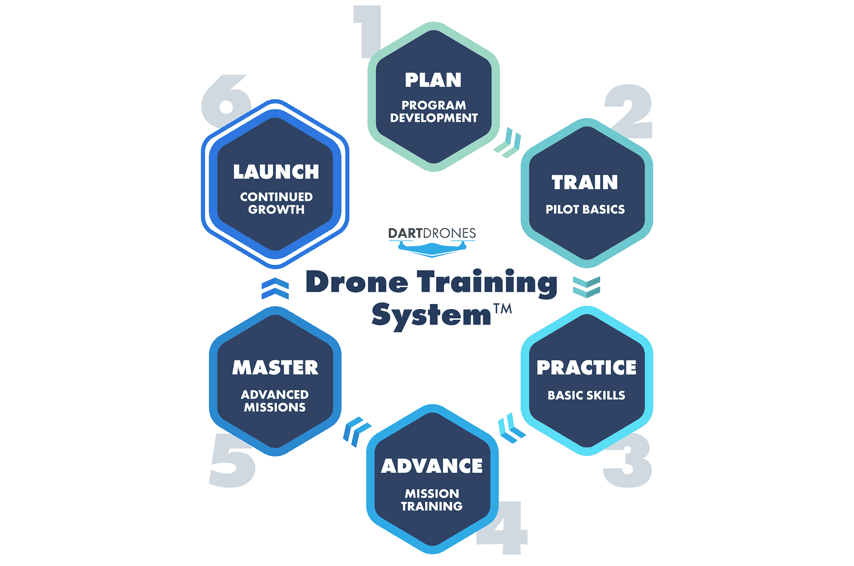
Before the Course Begins
- Finalize curriculum
- Prepare the teacher
- Purchase necessary equipment
- Confirm flight space and procedures
- Set up student access
When the Course Starts
- Introduce aviation fundamentals and safety
- Begin classroom instruction
- Introduce basic hands-on flight
As Students Progress
- Build Part 107 knowledge
- Develop more advanced flight skills
- Complete real-world projects
- Explore drone career pathways
At the End of the Program
- Review student progress
- Provide next steps for eligible students interested in Part 107 certification
- Identify opportunities to improve or expand the program
The plan does not need to predict every lesson, it simply needs to show that there is a logical path from approval to implementation.
Could You Start With a Pilot?
If a full-year program is difficult to launch immediately, a smaller pilot may be an option.
That could include a semester course, summer program, after-school program, or a drone module within an existing class.
A pilot can give the school an opportunity to evaluate student interest, teacher experience, equipment needs, and implementation before expanding.
What Should a High School Drone Program Proposal Include?
| Proposal Section | Include |
|---|---|
| Program Overview | What you want to launch and why |
| Student Audience | Grades and estimated enrollment |
| Learning Outcomes | Aviation, flight, Part 107, career and technical skills |
| Curriculum | Course structure, activities and assessments |
| Teacher Preparation | Training, flight experience and support |
| Equipment & Flight Space | Aircraft, accessories, technology and flight areas |
| Safety & FAA Planning | Supervision, procedures and regulatory planning |
| Budget | Startup and recurring expenses |
| Funding | Potential sources to investigate |
| Career Alignment | Industries, credentials and workforce skills |
| Implementation Timeline | What needs to happen before launch |
Download the High School Drone Program Proposal Template
A proposal does not need to start from a blank page.
Use our High School Drone Program Proposal Template to organize your program purpose, curriculum, teacher preparation, equipment, safety planning, budget, career connections, and implementation timeline.
Download the Proposal Template
Make It Easy for Decision-Makers to Understand the Program
Getting a high school drone program approved is not about presenting the largest equipment list or the most complicated plan.
It is about showing that the school has thought through the major pieces:
- What students will learn
- Who will teach them
- How the course will operate
- What it will cost
- How safety will be addressed
- How the program connects to careers
- What happens after approval
The exact approval process may differ from one school or district to another, but a clear and realistic proposal gives decision-makers something concrete to evaluate.
DARTdrones helps schools plan curriculum, teacher professional development, equipment, FAA Part 107 preparation, and hands-on drone education.
Explore High School Drone Curriculum
How to Start a High School Drone Program: A Step-by-Step Guide
Schedule a Call
Frequently Asked Questions About High School Drone Program Approval
Is there one approval process for starting a high school drone program?
No. Requirements may differ depending on the school, district, type of program, and whether you are proposing a new course, adding curriculum to an existing program, or purchasing equipment. Start by finding out which local process applies to your proposal.
What should be included in a drone-program proposal?
Include the program purpose, student outcomes, curriculum, teacher preparation, equipment and flight space, safety planning, budget, potential funding, career connections, and implementation plan.
Does a teacher need Part 107 before proposing the program?
Not necessarily to propose it. Schools should determine which FAA rules will apply to planned flight activities and how the teacher will be prepared before students begin flying.
Does a school need an expensive drone lab?
Not necessarily. Schools can begin with smaller training aircraft, basic flight supplies, existing classroom technology, and an appropriate flight space, then add more advanced equipment as the program grows.
Should funding already be secured before asking for approval?
That depends on the school’s process. Even when funding is not yet secured, having a realistic budget and identifying potential funding sources can make the proposal more useful to decision-makers.