Drone Grants for Schools: 6 Funding Opportunities Open This Winter (2026–27)
If you’re trying to fund a drone program this school year, two grant deadlines are coming up fast. Samsung Solve for Tomorrow closes December 7, and the Air & Space Forces Association Educator Grants close December 15.
Below are six funding sources that fit high school drone and UAS programs. For each one you’ll find who can apply, what it pays for, and when it’s due. For a step-by-step plan to fund a program over several years, see our guide How to Fund a School Drone Program: Grants, Perkins V & CTE Funding.
Funding opportunities at a glance
| Program | Who can apply | Typical award | Deadline | Best for |
| Samsung Solve for Tomorrow | Public schools, grades 6–12 (student teams with a teacher) | Prize packages; up to $50,000 for top schools | Dec 7, 2026 | A drone project that solves a local problem |
| AFA Educator Grants | K–12 teachers with aerospace-themed projects | About 500(20,000 across ~40 educators) | Dec 15, 2026 | Classroom drones and flight-science supplies |
| Perkins V | Districts and CTE centers, through your state | Varies by district | Set by your district’s Perkins cycle | Ongoing CTE pathway costs |
| Toshiba America Foundation | Teachers, grades 6–12 | Up to $5,000 (rolling); larger grants due Jun 1 and Nov 1 | Rolling | A pilot class or STEM lab |
| Rural Technology Fund | Rural or high-poverty U.S. public schools (not charter or private) | Usually 500–2,500 | No deadline; reviewed every 30–60 days | Starter equipment |
| FAA Aviation Workforce Development Grants | Eligible applicants set in federal law | Varies | Last round closed Jun 22, 2026 | Watch for the next round |
Deadlines this month
Samsung Solve for Tomorrow (due December 7). Students in grades 6–12 work with a teacher to propose a STEM solution to a problem in their community. Samsung says 500 schools will win prize packages, with up to $50,000 in prizes for the top schools. Drones fit naturally: mapping a flood-prone area, inspecting school roofs, or documenting erosion all make strong projects.
AFA Educator Grants (due December 15). The Air & Space Forces Association funds teachers with “innovative, aerospace-themed projects.” It awards $20,000 a year across about 40 educators, and awards are announced in February. A short, specific request works best, such as micro drones for indoor flight practice or materials for a flight-science unit.
Funding you can apply for any time
Perkins V. This federal CTE funding is the most dependable source for a drone program that runs year after year. It can pay for equipment, curriculum and teacher training when they support an approved CTE pathway. Start with your district’s Perkins or CTE coordinator, and tie your request to the district’s local needs assessment. Our funding guide walks through how.
Toshiba America Foundation. Teachers of grades 6–12 can request up to $5,000 for a STEM project at any time. Requests over $5,000 have two deadlines a year, June 1 and November 1, so the next large-grant deadline is June 1, 2027.
Rural Technology Fund. Rural and high-poverty public schools can apply at any time, and the fund reviews applications every 30 to 60 days. Most awards are 500–2,500. The fund focuses on computer science, robotics and maker projects, so frame a drone request around programming, building or robotics skills.
Coming back later
FAA Aviation Workforce Development Grants. The FAA’s Aircraft Pilots track supports education for future unmanned aircraft systems (UAS) operators. Its most recent round closed June 22, 2026. Check whether your district is an eligible applicant, and sign up for FAA updates so you hear when the next round opens.
Tips for a stronger application
- Match the size of the ask to the grant. Use small grants for a pilot class or equipment. Use Perkins V for a program that runs every year.
- Lead with student outcomes. For example: how many students will prepare for the FAA Part 107 exam, and which careers the course connects to.
- Show the real-world use. Reviewers respond to projects tied to local needs, such as mapping, inspections or public safety.
- Check each funder’s current rules. Deadlines and eligibility change from year to year.
Need help describing your program?
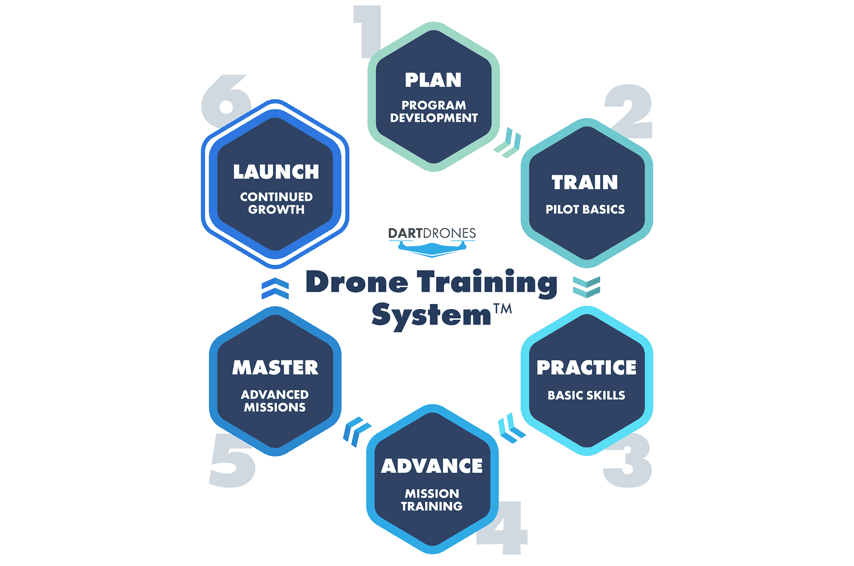
DARTdrones’ high school drone curriculum combines FAA Part 107 prep, hands-on flight and career pathways, with teacher training included. If you’re writing an application and want help describing the course, contact our team.
DARTdrones is not affiliated with the programs listed above. Information is current as of November 24, 2026.