How to Start a High School Drone Program: A Step-by-Step Guide

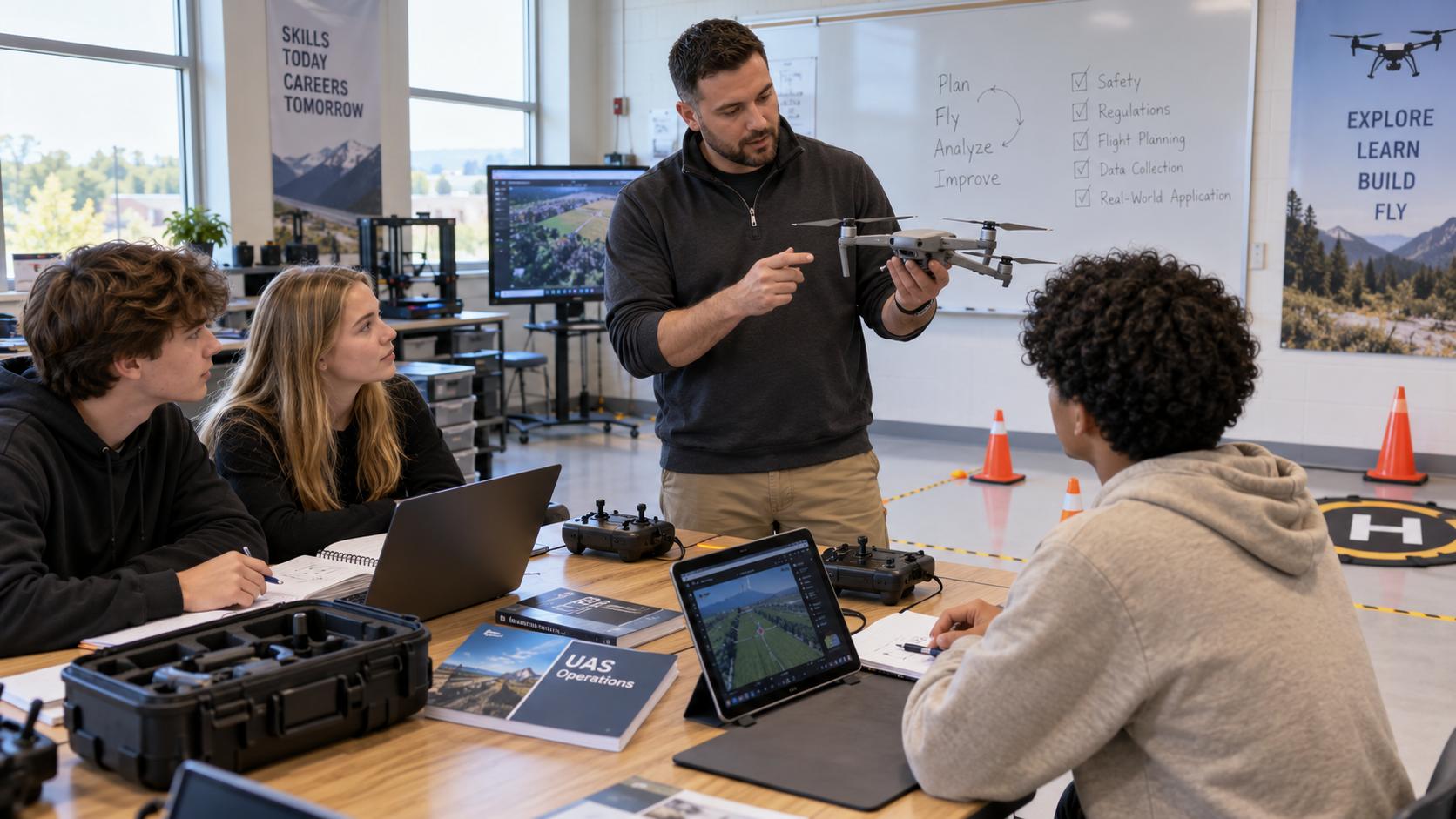
Drone education can give students a practical way to connect STEM and Career and Technical Education (CTE) concepts with skills used in real-world industries. But starting a high school drone program involves more than purchasing a few drones and heading outside to fly.
Schools need to think about curriculum, teacher preparation, equipment, safety, FAA knowledge, funding, scheduling, and how students will progress as their skills develop.
Whether your goal is to introduce students to drone technology, prepare eligible students for the FAA Part 107 exam, or create a career-focused CTE pathway, the steps below can help you build a program that is structured, engaging, and designed to grow with your students.
1. Define the Goals of Your Drone Program
Before selecting equipment or curriculum, determine what you want students to accomplish.
A school introducing drones as part of a STEM course may have very different needs from a CTE program focused on workforce preparation. Some programs may emphasize aviation knowledge and hands-on flight, while others may want students to work toward FAA Part 107 certification and eventually explore advanced commercial drone applications.
Consider whether your program will focus primarily on introductory drone education, Part 107 preparation, hands-on flight skills, career exploration, real-world industry applications, or a combination of these areas.
Establishing those goals first makes it easier to choose the right curriculum, equipment, course length, and teacher preparation.
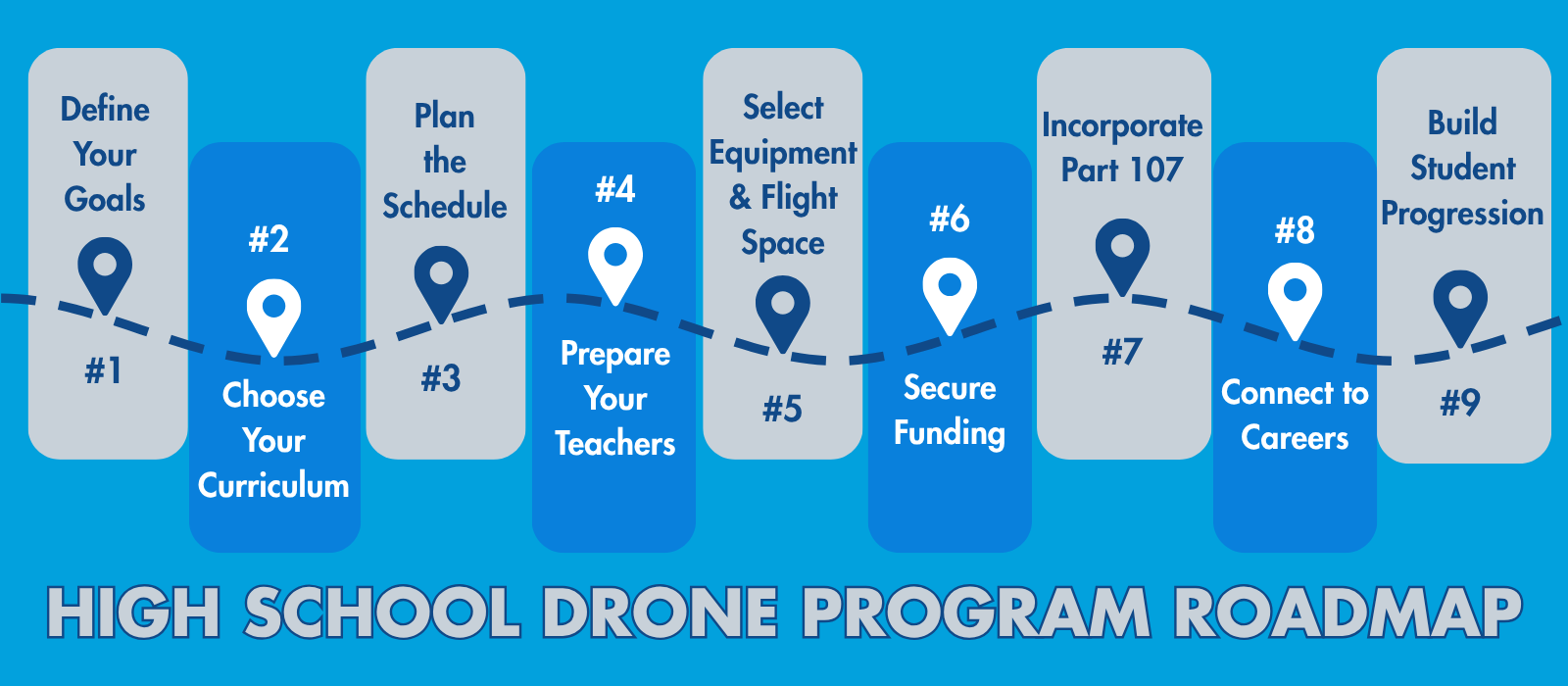
2. Choose a High School Drone Curriculum
A strong drone program should go beyond teaching students how to maneuver an aircraft.
Students should have opportunities to learn aviation fundamentals, FAA regulations, safe operating procedures, flight planning, hands-on piloting skills, and how drones are used professionally. Career exploration and real-world applications can also help students understand why the skills they are learning matter outside the classroom.
Look for a curriculum that gives teachers a clear structure to follow while allowing students to progress from foundational concepts into more advanced skills.
Explore DARTdrones’ high school drone curriculum to see how schools can combine classroom instruction, hands-on flight, Part 107 knowledge, and real-world career applications.
3. Decide How the Program Will Fit Into Your Schedule
There is no single schedule that works for every school.
A drone program could be incorporated into a full-year CTE course, semester-long elective, summer program, after-school program, or another modular learning format. The right structure will depend on instructional time, student goals, available resources, and how advanced you want the program to become.
A longer program provides more time for students to build aviation knowledge, practice flight skills, prepare for certification, and explore industry applications. Shorter programs may focus more heavily on introductory concepts, career exploration, or specific hands-on activities. The important part is choosing the learning objectives first and then building a schedule that gives students enough time to reach them.
DARTdrones Insight
Schools use a variety of formats, but DARTdrones most commonly sees high school programs structured as semester or full-year courses.
4. Prepare Your Teachers
Teachers do not necessarily need to begin as experienced drone pilots to lead a successful drone program. They do, however, need the right training, instructional resources, and understanding of drone operations to confidently guide students.
A teacher-ready program should provide structured lesson materials, activities, assessments, guidance for hands-on exercises, and a way to track student progress. Educators should also understand the FAA rules and safety considerations that apply to the drone operations they plan to conduct. Professional development can give teachers hands-on experience and help them become comfortable with both the technology and the curriculum before bringing it into the classroom.
DARTdrones currently offers teacher professional development covering Part 107 topics, equipment, flight training, emergencies, curriculum implementation, and student progress tracking.
DARTdrones Instructor Insight
A teacher does not need to begin with extensive aviation or drone experience to lead a successful program. What matters is building a strong foundation through Part 107 and hands-on flight training, having access to resources and support when questions come up, and bringing genuine curiosity and enthusiasm for aviation and drones into the classroom.
5. Plan Your Equipment and Flight Space
You do not need to build a specialized aviation lab before starting a high school drone program.
The equipment needed will depend on the number of students, the curriculum, the type of flight training being offered, and your program goals. Schools may need student computers or tablets for coursework, drones appropriate for the students’ skill level, and a safe area where flight activities can take place.
Smaller drones can be useful for introducing basic controls and indoor flight activities, while more advanced aircraft can be introduced as students progress into outdoor operations and real-world applications. Before purchasing equipment, determine what students will actually be expected to do with it. That can help prevent schools from spending money on technology that does not support the curriculum.
6. Determine Your Funding and Budget
Once you know what the program will include, build a budget around the curriculum, teacher preparation, equipment, and other resources required for implementation.
Depending on the school and program, potential funding may come from CTE, STEM, workforce-development, district, career-readiness, grant, or other education funding sources. Eligibility and allowable expenses vary, so schools should evaluate funding opportunities based on their specific program and state or district requirements.
It can help to separate the program into major cost categories so administrators understand what is needed to launch the program and which expenses may be one-time versus ongoing.
7. Build FAA Part 107 Preparation Into the Program
For schools focused on career preparation, FAA Part 107 knowledge can be an important part of the learning pathway.
Part 107 covers the regulations and operating requirements for many non-recreational small-drone operations in the United States. Students can begin learning concepts such as airspace, weather, regulations, safe operations, and aeronautical decision-making as part of their broader drone education.
Eligible students who want to pursue professional drone work can then work toward earning an FAA Remote Pilot Certificate. The FAA currently requires first-time applicants to be at least 16 years old and pass the applicable aeronautical knowledge exam, along with its other eligibility requirements.
Not every student needs to earn the certificate for a drone course to be valuable. Younger students can still build aviation knowledge, flight skills, safety awareness, and career readiness that prepares them for the next stage of their education.
8. Connect Drone Skills to Career Pathways
Students are more likely to understand the value of drone education when they can see where those skills might take them.
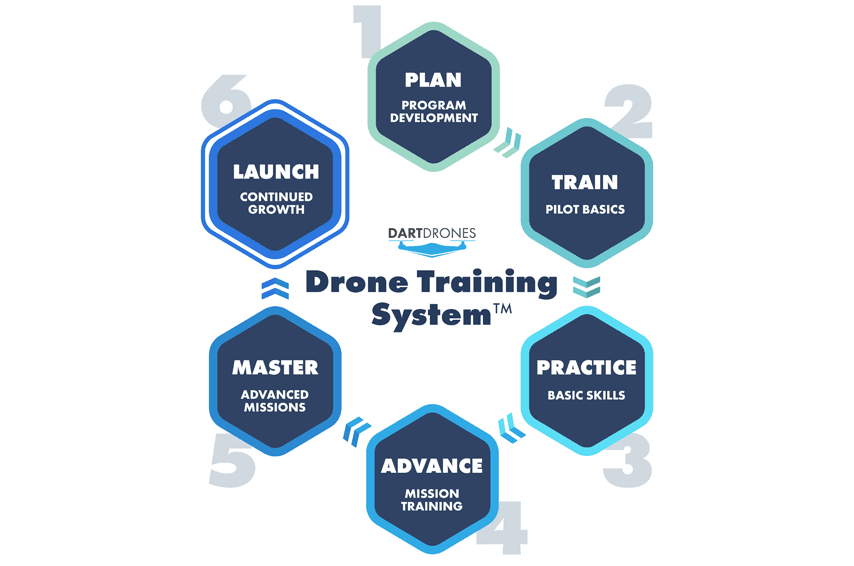
Commercial drone technology is used across fields including public safety, construction, infrastructure inspection, mapping, photography and videography, emergency response, and other professional applications. DARTdrones’ broader training model similarly progresses from fundamentals into mission-specific applications such as mapping, inspections, disaster response, photography, and search and rescue.
Career exploration can be incorporated throughout the course rather than treated as a lesson students complete at the end. When students practice a flight activity or learn a new aviation concept, connect it to how a professional might use that skill in the field.
That helps turn a drone class into a broader career-readiness experience.
9. Create a Plan for Student Progression
A successful drone program should give students somewhere to go after they master the basics.
Rather than teaching isolated lessons, think of the program as a progression:
Drone fundamentals → aviation and safety knowledge → hands-on flight skills → FAA Part 107 preparation → real-world missions and industry applications
Students can begin by understanding the aircraft and learning basic flight skills, then gradually take on more complex planning, decision-making, and mission-based activities. This approach also gives schools room to expand. A program may start with one introductory course and eventually grow into more advanced training as student interest, teacher experience, and available resources increase.
Ready to Start a High School Drone Program?
Bring Professional Drone Education to Your School
DARTdrones can help schools bring structured drone education into the classroom with curriculum, teacher resources, FAA Part 107 preparation, hands-on flight training, and real-world career applications.
Whether you are developing a new STEM or CTE program or expanding an existing aviation pathway, our team can help you determine the training and resources that fit your students and program goals.
Check out our High School Drone Program Launch Checklist that administrators and teachers can save and use while planning a program at their school.
Schedule a Call
Frequently Asked Questions About Starting a High School Drone Program
Do students need experience with drones before joining a high school drone program?
No. A high school drone program can begin with foundational aviation and flight concepts before progressing into more advanced skills and applications.
Does every student need to earn a Part 107 certificate?
No. Part 107 certification can be an excellent goal for eligible students interested in professional drone operations, but students can still gain valuable aviation, technical, safety, flight, and career-readiness skills without earning the certificate.
Does a teacher need to be an experienced drone pilot?
Teachers can learn the knowledge and skills needed to deliver a drone program through structured curriculum, professional development, and ongoing instructional support.
What equipment does a high school drone program need?
Equipment varies by program, but schools will generally need access to student devices, appropriate training drones, and a safe location for hands-on flight activities.
Can drone curriculum be used in a CTE program?
Yes. Drone education can connect technical learning with aviation, career exploration, FAA knowledge, and real-world applications, making it a natural fit for many CTE and workforce-readiness programs.