Drone Careers for High School Students: A CTE Career Guide

Originally published October 29, 2025 | Updated October 2026 by the DARTdrones Team
Learning to fly a drone can be exciting, but flying is only one part of the career opportunity.
Professional drone operations increasingly combine aviation with skills in data collection, mapping, inspections, photography, public safety, construction, and other technical fields.
For high school students, that means a drone course can provide exposure to multiple career pathways—not simply prepare them to become “drone pilots.”
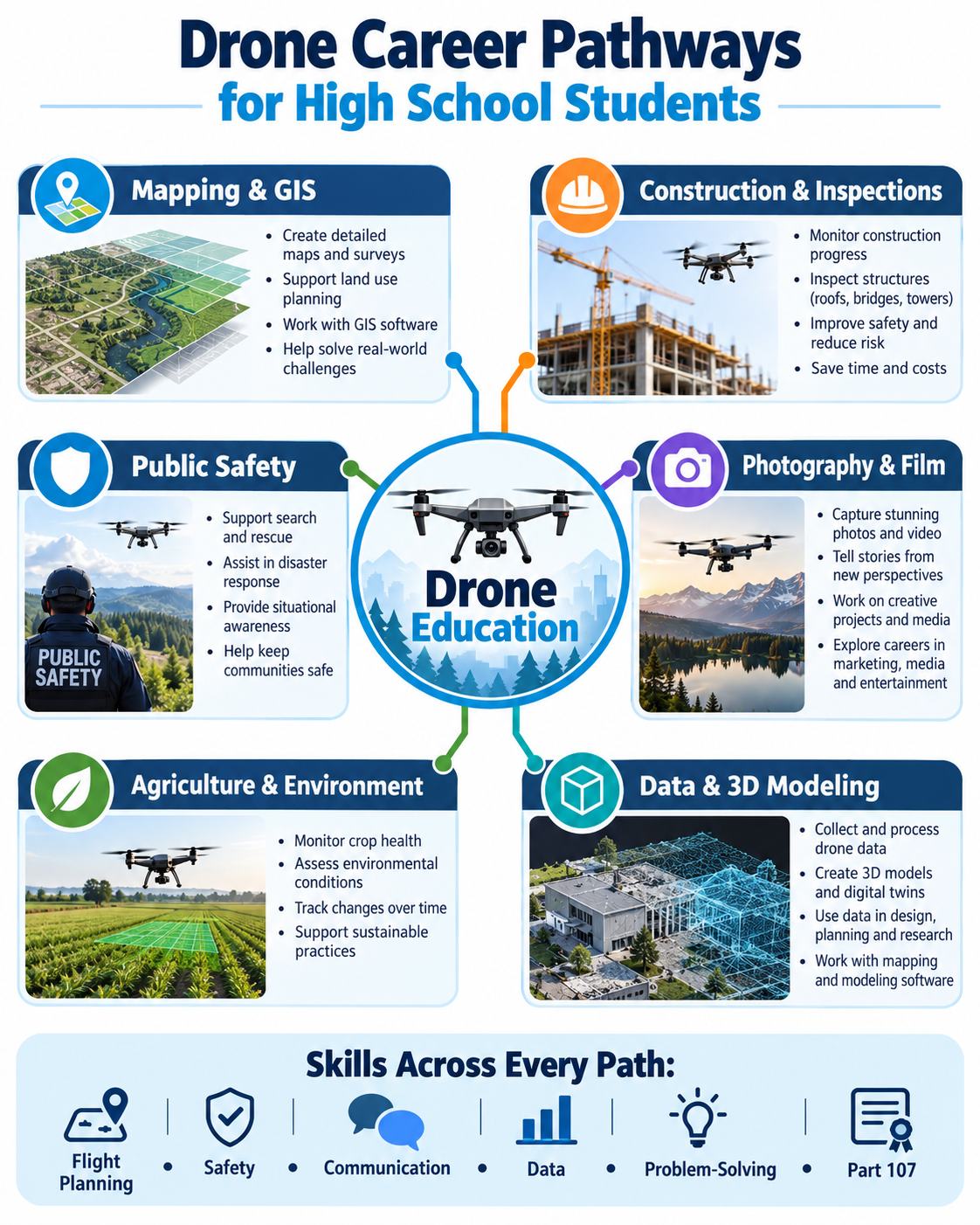
1. Mapping, Surveying, and Geospatial Technology
Drones can collect aerial imagery that is processed into maps, models, and other geospatial information.
Students interested in this area may eventually encounter skills and technologies such as:
- Photogrammetry
- 2D mapping
- 3D modeling
- Geographic information systems
- Mission planning
- Data processing
- Aerial image interpretation
DARTdrones Instructor Insight
DARTdrones instructors recommend exposing students to careers involving drone data analysis, photogrammetry, and 3D mapping—not just aircraft operation.
2. Construction and Infrastructure
Drones are used across construction and infrastructure projects to collect visual data, document progress, inspect structures, and support mapping.
Students interested in construction, engineering, architecture, or skilled technical careers can benefit from understanding how drone technology fits into a larger project workflow.
Potential applications include:
- Construction progress documentation
- Site mapping
- Roof and structure inspections
- Infrastructure monitoring
- 3D modeling
- Asset documentation
The important lesson for students is that the drone often functions as a data-collection tool within another profession.
3. Inspection Careers
Inspection work can involve drones equipped with cameras or more specialized sensors.
Depending on the industry, drones may support inspection of:
- Buildings
- Roofs
- Utilities
- Infrastructure
- Solar installations
- Industrial assets
More advanced applications can involve technologies such as thermal imaging or LiDAR.
DARTdrones Instructor Insight
DARTdrones instructors recommend introducing students to advanced inspection technologies, including LiDAR when possible, so they understand how professional drone work can extend beyond standard photography.
4. Public Safety and Emergency Response
Public-safety agencies use drones in applications such as:
- Search and rescue
- Disaster response
- Fire-scene support
- Situational awareness
- Damage assessment
- Emergency mapping
Students interested in law enforcement, fire service, emergency management, or public safety technology can see how aviation skills intersect with mission planning and decision-making.
DARTdrones’ professional training portfolio includes dedicated Search & Rescue and Disaster Response training, giving schools a real connection between introductory education and professional applications.
5. Photography, Video, and Media
For students interested in creative careers, drones can add an aerial perspective to photography and video.
Applications can include:
- Film and video production
- Marketing content
- Real estate media
- Sports coverage
- Tourism content
- School communications
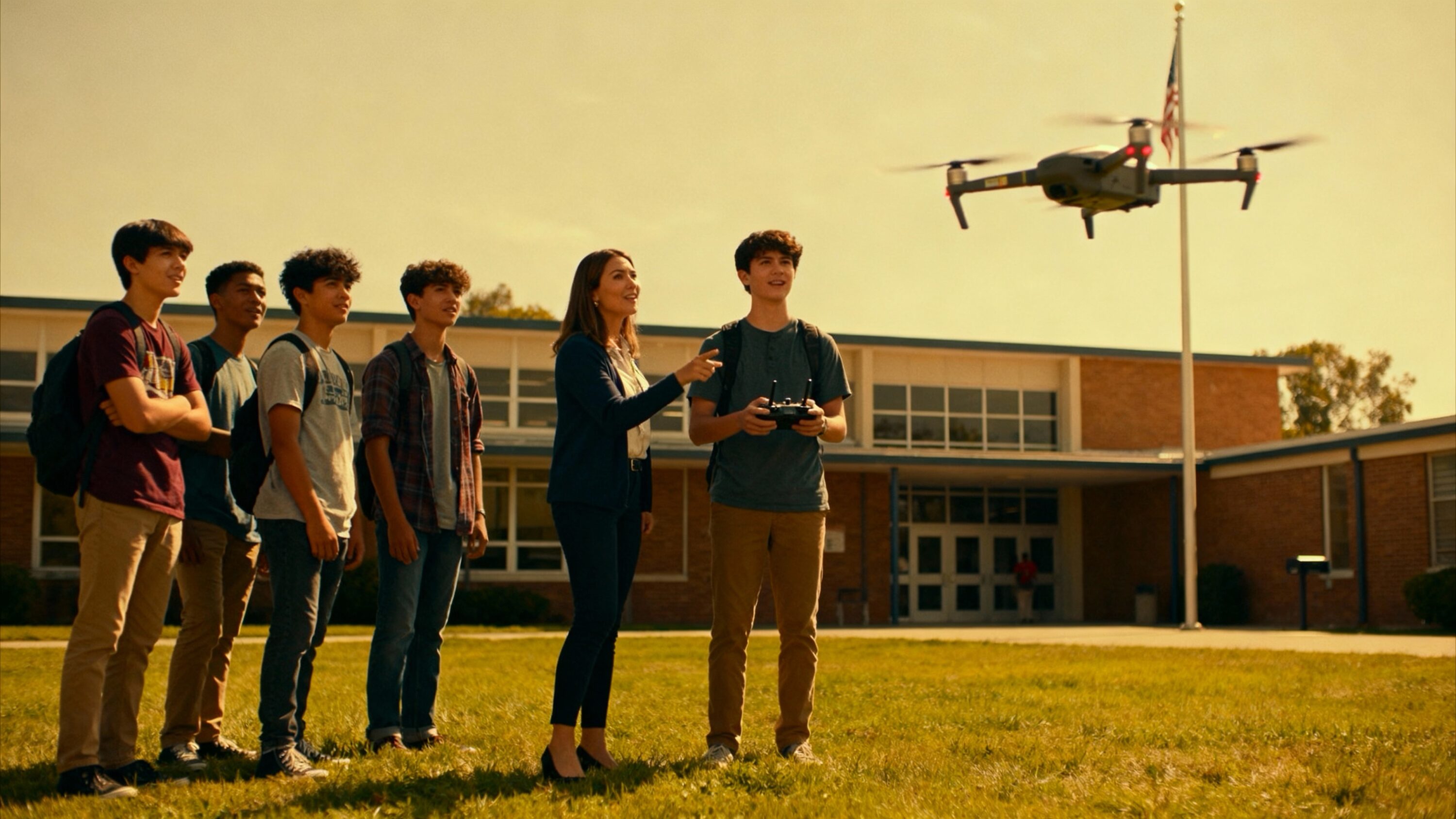
High-school students can begin exploring these skills through real projects around the school.
For example, students might capture approved aerial images for a yearbook, school organization, campus video, or other classroom project. That gives students experience producing an actual deliverable rather than simply practicing flight maneuvers.
6. Agriculture and Environmental Applications
Drones can support agricultural and environmental work through aerial imagery, mapping, monitoring, and data collection.
Students interested in agriculture, natural resources, environmental science, or technology can explore applications such as:
- Crop monitoring
- Field mapping
- Environmental documentation
- Conservation work
- Land and vegetation analysis
The specific technology may vary, but the broader career lesson is valuable: drones can help professionals collect information more efficiently from the air.
7. Drone Data and Technology Careers
Some students may be more interested in what happens after the drone lands than in piloting itself.
Drone operations can produce large amounts of imagery and data that must be:
- Organized
- Processed
- Analyzed
- Interpreted
- Presented
- Turned into a useful deliverable
That creates opportunities for students interested in data, software, mapping, engineering, and technology.
DARTdrones Instructor Insight
The ability to collect information is only part of professional drone work. Students should also learn how to present what they collected and communicate the results clearly.
Drone Careers Require More Than Flying Skills
Professional drone work can require skills such as:
| Skill | How It Applies |
|---|---|
| Flight Planning | Preparing safe, efficient missions |
| Communication | Working with team members, clients, or stakeholders |
| Data Collection | Capturing usable imagery and information |
| Data Interpretation | Understanding what collected information means |
| Presentation Skills | Turning findings into useful deliverables |
| Decision-Making | Responding to changing conditions and operational risks |
| Project Management | Planning missions and keeping work organized |
| Customer/Client Management | Understanding requirements and delivering useful results |
Where Does FAA Part 107 Fit?
For students interested in commercial drone operations, earning an FAA Remote Pilot Certificate can be an important step.
Eligible students can earn Part 107 beginning at age 16, but certification should be viewed as a foundation rather than the entire career pathway.
Knowing FAA regulations does not automatically make someone a mapping specialist, inspector, photographer, or public-safety drone operator.
Students also need hands-on flight experience and exposure to the skills used in whichever industry interests them.
How Can Schools Connect Drone Lessons to Careers?
Career exploration works best when students can connect classroom activities to something professionals actually do.
For example:
Obstacle-course flying → Aircraft control and precision
School photography project → Media and content production
Automated mapping mission → Surveying, construction, or geospatial technology
Photogrammetry project → Mapping, modeling, and data analysis
Mock inspection → Infrastructure and industrial applications
Search-and-rescue scenario → Public safety and emergency response
This helps students understand why they are developing each skill.
A Drone Course Can Open More Than One Career Path
Students do not need to decide in high school that they want to become full-time drone pilots.
Drone education can introduce them to aviation while also exposing them to:
- Engineering
- Construction
- Public safety
- GIS and mapping
- Media
- Agriculture
- Data science
- Technology
- Emergency management
For some students, the drone itself may become their career. For others, it may become a tool they use within an entirely different profession. That is what makes drone education particularly useful in a CTE environment.
Explore Drone Career Pathways in the Classroom
A high school drone program can help students move from basic aviation knowledge and flight skills into real-world applications that connect directly to CTE and workforce pathways.
DARTdrones’ high school curriculum combines FAA Part 107 preparation, hands-on flight activities, career exploration, and professional drone applications.
Explore High School Drone Curriculum
How to Start a High School Drone Program
Schedule a Call
Frequently Asked Questions About Drone Careers for High School Students
What careers can high school students explore with drones?
Drone skills connect to careers in mapping, surveying, construction, infrastructure inspection, public safety, photography and film, agriculture, environmental work, data analysis, and other technical fields.
Is “drone pilot” the only drone career?
No. In many industries, operating the drone is only one part of the job. Professionals may also specialize in mapping, inspections, imagery, data analysis, project planning, public safety, engineering, or other areas.
Do students need Part 107 for a drone career?
Students interested in conducting professional drone operations in the United States may eventually need an FAA Remote Pilot Certificate depending on their role and operations. Eligible students can earn the certificate beginning at age 16.
What skills besides flying should students learn?
Useful skills include flight planning, safety, communication, data collection and interpretation, problem-solving, teamwork, presenting information, and understanding how drone data is used in professional workflows.
Can drone education fit into a CTE program?
Yes. Drone education can connect aviation and technical skills with career pathways across industries such as construction, public safety, media, mapping, agriculture, and technology.